Understanding Your Pet’s Dietary Needs: Beyond Just Pellets
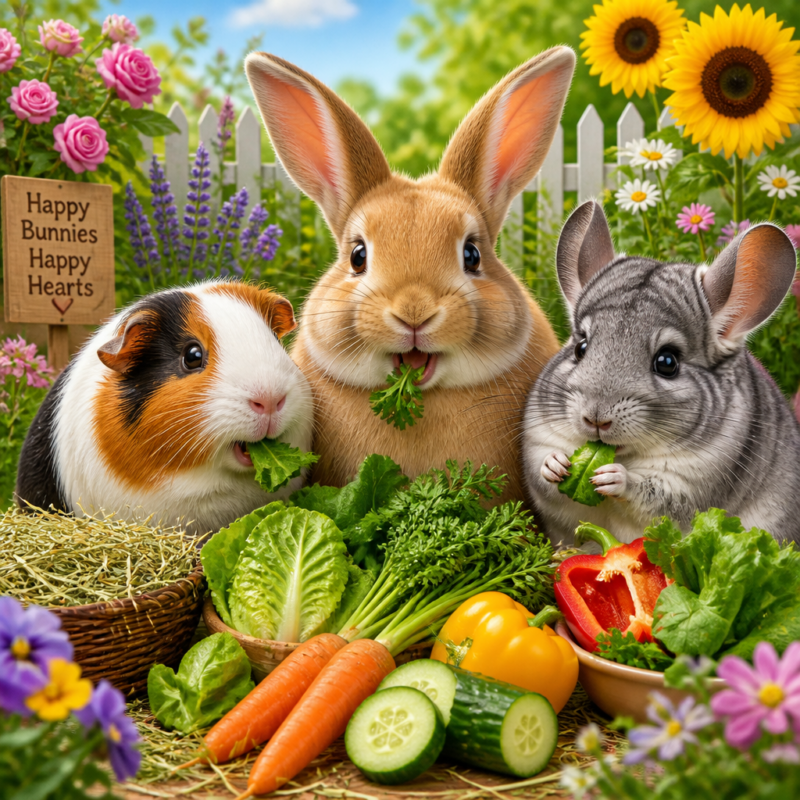
Many pet owners might assume that pellets are enough to keep their rabbits, guinea pigs, or chinchillas healthy. However, this is a common misconception. A diet solely based on pellets lacks the variety and nutrients that small animals require to thrive. Fresh vegetables, hay, and occasional treats are crucial for their overall well-being.
Providing a balanced diet not only supports physical health but also encourages natural behaviors in small pets. Fresh greens and hay contribute to dental health and digestive function, while also keeping them mentally stimulated. It’s essential to research and incorporate a range of foods to ensure your pet leads a happy and healthy life.
Remember, the right diet is vital for your furry friends, and it’s never too late to learn about their needs. By expanding their diet beyond just pellets, you can significantly improve their quality of life.
As a rough daily split for rabbits and guinea pigs: hay should make up around 80% of their diet, with a small, measured portion of pellets, a serving of fresh leafy vegetables, and treats kept to a minimum. Chinchillas need a similar hay-first approach, though with less fresh produce overall since their digestive systems are more sensitive to it.
One species-specific note worth knowing: guinea pigs, unlike rabbits and chinchillas, can’t produce their own vitamin C and need it from their diet every day, whether through vitamin C-rich vegetables or a supplement — a deficiency can cause real health problems over time, which is part of why fresh veg isn’t optional for them the way it might be treated for other small pets.
Originally reported by Chinchillas – Small Pet Select Blogs.