Understanding and Alleviating Stress in Small Pets
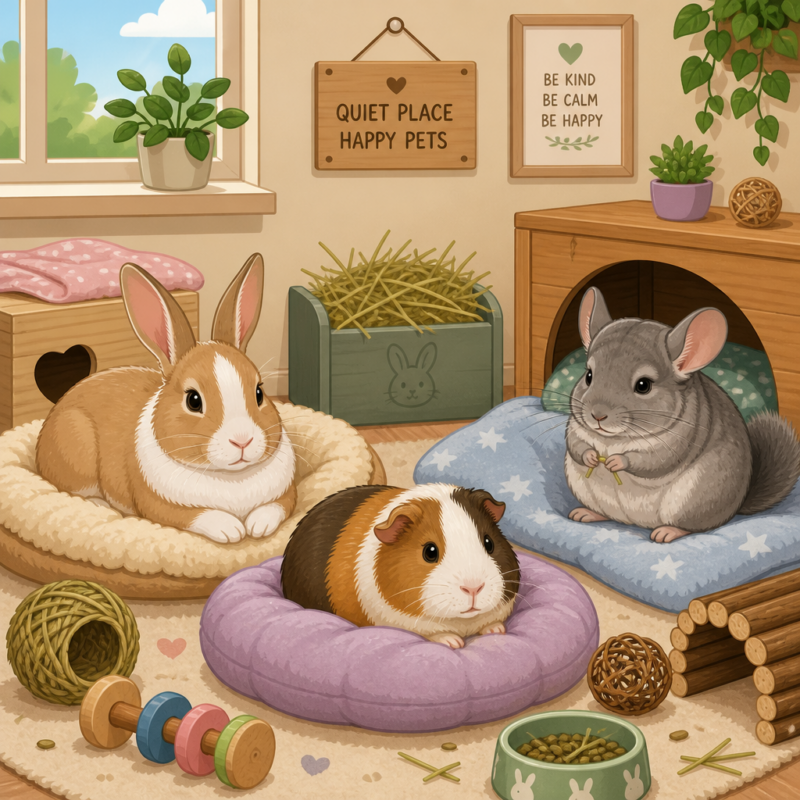
Just as we can feel stress, our small pets like rabbits, guinea pigs, and chinchillas can too. It’s crucial for pet owners to be aware of the signs of stress in these animals to ensure they lead a comfortable and happy life. Common stress triggers can range from environmental changes and loud noises to improper handling.
Identifying stress early is key. Symptoms may include changes in behavior, such as hiding, aggression, or changes in eating habits. By recognizing these signs, you can take steps to create a more serene environment for your furry friends. Simple changes, like providing hiding spots or reducing noise, can make a significant difference.
As responsible pet owners, it’s our duty to create a safe space for our pets to thrive. By understanding what stresses them and how to alleviate it, we can help ensure that they remain relaxed and healthy.
Because rabbits, guinea pigs and chinchillas are all prey animals, they carry a certain baseline of alertness even in a calm home — but that’s different from ongoing stress, which tends to show up as reduced appetite, excessive hiding, unusual aggression, or over-grooming. Loud noises, the smell or sight of a predator animal like a dog or cat, and frequent handling by unfamiliar people are common triggers worth ruling out first.
A few hiding spots in the cage or enclosure — even something as simple as an upturned box with an entrance cut into it — give a stressed pet somewhere to retreat and feel safe, which on its own can noticeably reduce anxious behaviour over time.
Originally reported by Chinchillas – Small Pet Select Blogs.